
Picture this: you’re sipping coffee on a breezy Saturday morning, the sunlight spilling through your sleek French doors, and suddenly you hear that faint click of a lock that just won’t stay put.
That uneasy feeling? It’s the moment many homeowners realize their beautiful entryway might be the weakest link in their home’s security.
We get it. French doors are gorgeous, they bring the outdoors in, and they make a house feel like a home. But their large glass panels and multiple hinges also give burglars a tempting target if the locks aren’t up to the task.
So, what should you look for when choosing french door security locks? First, think about the lock’s grade. A solid‑grade or ANSI‑rated deadbolt gives you a sturdy barrier that resists forced entry. Second, consider a multi‑point locking system that engages at the top, middle, and bottom of the door frame – it’s like giving the door a firm hug from three angles.
And don’t overlook the strike plate. Reinforcing that little metal plate with longer screws can make a world of difference; we’ve seen simple upgrades stop a pry from turning the door into a lever.
But here’s the kicker: aesthetics still matter. You don’t have to hide a bulky deadbolt behind a decorative knob. Today’s market offers sleek, low‑profile knobs and levers that blend with the French door’s design while still delivering military‑grade security.
Does it feel overwhelming? Maybe it does at first, but think of it as a series of small steps. Start by checking the existing hardware – is the deadbolt a basic latch or a real deadbolt? Feel the strike plate; can you see the screws? If they’re short, that’s a red flag.
Next, explore upgrade options that match your style. Brands like Schlage and Kwikset have lines specifically for French doors, offering both single‑point and multi‑point solutions. A quick trip to a local hardware store or a browse on a reputable online retailer can reveal the perfect fit.
And remember, you don’t have to tackle everything alone. Simple DIY reinforcement can be done with a screwdriver and a few extra screws, while a professional locksmith can handle the more complex multi‑point installations.
Ready to protect that sun‑lit view without compromising the look? Let’s dive deeper into the top lock types, installation tips, and maintenance tricks that will keep your French doors both stunning and secure.
Choosing the right french door security locks means balancing sleek style with solid protection, so you can enjoy sun‑filled rooms without worrying about break‑ins. We walk you through lock grades, multi‑point systems, and simple reinforcement tricks that turn any French door into a strong, attractive barrier for your home today.
Table of Contents
- Top 1: Mortise Deadbolt Locks for French Doors
- Top 2: Surface‑Mounted Smart Locks
- Top 3: Keyed Entry Lever Locks
- Top 4: Multi‑Point Locking Systems
- Top 5: Reinforced Padlock Solutions
- Conclusion
- FAQ
Top 1: Mortise Deadbolt Locks for French Doors
When you glance at a pair of French doors, the first thing you notice is the sleek glass and the way the light streams in. The second thing? The lock—often a simple latch that looks cute but doesn’t do much when someone tries to pry it open. That’s where mortise deadbolt locks step in, turning a pretty façade into a solid barrier.
Mortise deadbolts sit inside a pocket (the mortise) cut into the door edge, so the lock body is hidden and the bolt itself extends deep into the frame. Because the bolt is longer and the mechanism is housed inside the door, you get a level of security that’s hard to beat without sacrificing style.
Here’s why they’re a favorite among homeowners who love both aesthetics and peace of mind:
Why Mortise Deadbolts Stand Out
- Deep engagement. The bolt typically reaches 1‑inch or more into the strike plate, making it much tougher to force‑out than a standard surface‑mounted deadbolt.
- Low‑profile look. No bulky knob sticks out; the lock blends with the door’s clean lines, which is perfect for those modern interiors.
- Multi‑point compatibility. Many mortise units can be paired with a three‑point locking system, so you get extra grip at the top and bottom of the door.
But you might be thinking, “Do I need a professional to install this?” Not necessarily, but it’s a good idea to have a skilled hand if you’re not comfortable cutting a mortise. A properly sized mortise ensures the lock sits flush and the bolt aligns perfectly with the strike plate.
Speaking of strike plates, don’t forget to reinforce them. A longer‑screw strike plate can make the difference between a lock that holds and one that gives way under pressure. We walk through that in detail here: Deadbolt Strike Plate Reinforcement: A Step‑By‑Step Guide.
Now, let’s talk about the little things that add up to big security gains.
Installation Tips You Can Actually Follow
1. Measure twice, cut once. Before you cut a mortise, double‑check the lock’s dimensions against your door thickness. Most French doors are 1‑¾ to 2‑inches thick.
2. Use a quality strike plate. Look for a plate that’s at least 3‑inch wide with 3‑inch screws. The longer screws should go into the wall stud, not just the door frame.
3. Seal the gap. After installation, apply a thin bead of silicone around the lock housing to keep drafts out and deter moisture buildup.
4. Test the latch. Close the doors, engage the deadbolt, and give it a firm pull. If the bolt slides smoothly and the door feels solid, you’ve done it right.
And if you’re already thinking about smart upgrades, consider pairing your new mortise deadbolt with a home‑automation system. A smart hub can let you lock and unlock remotely, receive tamper alerts, and even integrate with cameras. For a seamless experience, check out Smart Citizens, a Dubai‑based smart‑home specialist that can wire your lock into a broader security ecosystem.https://www.youtube.com/embed/U_la57u4ZJE
Seeing a lock in action makes the difference between “maybe it works” and “I know it’s solid.” This quick video walks through a mortise deadbolt installation on a typical French door, highlighting the tools you’ll need and the steps to avoid common pitfalls.
If you prefer to hand the job off, a reputable contractor can ensure everything lines up perfectly. One such service is G L Lewis Construction, which offers door‑and‑window installations as part of broader home‑renovation projects.
Finally, a quick checklist to run through before you call it a day:
- Is the mortise cut to the exact size of the lock?
- Do the screws in the strike plate hit the studs?
- Is the deadbolt extending at least 1‑inch into the frame?
- Did you apply a weather‑seal around the lock housing?
If you can answer “yes” to all of those, you’ve turned a beautiful set of French doors into a fortress without sacrificing the view. And that’s the sweet spot we aim for at Home security Ready—style that doesn’t compromise safety.
Top 2: Surface‑Mounted Smart Locks
When you’re already convinced that a mortise deadbolt is the heavyweight champ, the idea of a surface‑mounted smart lock can feel like a sleek, high‑tech sidekick. It’s the kind of upgrade that says, “I love my French doors, but I also love not having to fumble for keys at night.”
Imagine this: you step out for a quick coffee, toss the door shut, and—without even reaching for your phone—the lock clicks shut and sends a tiny notification that it’s locked. No extra hardware protruding into the frame, just a slim module that hugs the surface of the door like a well‑fitted cuff.
Why surface‑mounted smart locks work for French doors
First off, they’re designed to sit on the door’s interior face, so you don’t have to cut a mortise pocket. That means less invasive work, which is a win if you’re living in a rental or just don’t want to mess with the door’s structural integrity.
Second, most of the leading models come with built‑in deadbolts or latch bolts that engage directly with the strike plate. In practice, the bolt still drops into the jamb, giving you the mechanical strength you’d expect from a traditional lock, while the smart electronics handle the remote side of things.
And because they’re surface‑mounted, you can swap them out later without committing to a permanent installation. If a new firmware update promises better battery life, you simply replace the unit—no re‑drilling needed.
Key features to look for
- Auto‑relock timing. A timer that automatically re‑locks after you walk away removes the “did I remember to lock?” anxiety.
- Battery backup. Look for models that run on AA or AAA batteries with a clear low‑battery alert. A 12‑month lifespan is common, but always verify the backup window.
- Integration with voice assistants. Whether you use Alexa, Google Assistant, or Apple HomeKit, a lock that talks to your existing ecosystem lets you lock doors with a simple voice command.
- Tamper‑alert sensors. If someone tries to pry the lock off the surface, you get an instant push notification.
So, what should you do next? Grab a notepad and compare the specs of a few popular models. Pay attention to the bolt throw length—aim for at least ¾ inch—and make sure the lock’s mounting plate aligns with the edge of your French door frame.
Installation without a toolbox nightmare
Even if you’re not a handyman, surface‑mounted smart locks are meant for DIY. Most brands ship with a pre‑drilled template that matches the standard 1‑inch‑by‑2‑inch opening on typical French doors. All you need is a screwdriver, a level, and a little patience.
Step‑by‑step, the process looks like this:
- Mark the mounting spot on the interior side of the door, usually centered between the two glass panels.
- Use the template to drill pilot holes for the mounting screws.
- Attach the lock’s mounting plate, making sure it’s perfectly level.
- Snap the smart lock module onto the plate, feed the battery, and run the initial pairing with your phone.
If you hit a snag—say the template doesn’t line up because of a custom‑size door—don’t panic. A quick call to a local locksmith can clear the hurdle, and they’ll often have the right adapters on hand.
Smart lock safety tips
Just because a lock is “smart” doesn’t mean you can ignore the basics. Keep the firmware up to date; manufacturers release patches that close security holes faster than you can say “Bluetooth.”
Also, treat the lock’s physical key as a backup, not a primary method. If the battery dies unexpectedly, you’ll still have a manual way to secure the door.
One thing we’ve noticed in our own testing: the combination of a solid deadbolt bolt and a smart module creates a layered defense. The bolt stops a brute‑force pry, while the smart features deter opportunistic burglars who rely on the element of surprise.
Here’s a quick checklist before you finish the install:
- Confirm the bolt fully engages with the strike plate.
- Test the auto‑relock function a few times.
- Check the mobile app for clear lock/unlock status.
- Set up tamper alerts and ensure they’re firing correctly.
When all of that checks out, you’ve just turned a beautiful French door into a tech‑savvy security barrier—without sacrificing any of its elegance.
And if you ever need a deeper dive into the best home‑security products for 2024, we’ve got a roundup you might find useful (just a heads‑up, no hard sell).
That video walks through the unboxing, setup, and a live‑demo of a surface‑mounted lock on a French door, so you can see exactly how the bolt aligns and how the app looks in real time.
Top 3: Keyed Entry Lever Locks
When you love the look of French doors but hate the idea of a flimsy handle, a keyed entry lever lock can be the sweet spot between style and security.
1. Traditional Brass Lever with Integrated Key
Picture the classic brass lever you might have seen on a historic townhouse. It feels solid, it sounds reassuring when you pull it, and it hides a key cylinder right inside the lever. The key gives you that old‑school backup if the battery on a smart lock dies, while the lever’s shape blends nicely with the door’s glass‑to‑frame lines.
What we’ve seen work best is a lever that matches the 2‑3/8″ or 2‑3/4″ backset most French doors use. That way you don’t have to chisel away extra wood. A quick tip: before you buy, measure from the edge of the door to the center of the existing knob – it’s usually 70 mm or 60 mm. If the dimensions line up, installation is usually a matter of swapping the old handle, threading the new key cylinder, and tightening the set screws.
Need a concrete example? Check out this U‑shaped keyed entry lever designed for double‑handle French doors. It’s all‑metal, fits the common 2‑3/8″ backset, and even includes a safety bar to help prevent kick‑ins.
2. Lever with Reinforced Strike Plate
Even the toughest lever can be compromised if the strike plate is weak. That’s why we always recommend pairing your lever with a reinforced strike plate – think of it as a bodyguard for the lock.
When you install the lever, take a minute to pull the bolt home and look at the metal plate on the jamb. If it’s a thin, cheap‑looking piece, replace it with a 1‑inch thick steel plate and drive three‑inch screws into the studs behind the jamb. This simple upgrade can multiply the lever’s resistance to forced entry by up to 300%.
And here’s a little habit that saves headaches: after you’ve bolted the new plate, give the lever a firm push. If the bolt still slides smoothly and you feel no wobble, you’ve done it right. If it sticks or rattles, double‑check the plate’s alignment and the screw depth.
3. Lever with Built‑In Anti‑Pick Pin
Some newer lever designs come with an internal anti‑pick pin that adds a layer of difficulty for anyone trying to manipulate the lock without a key. It’s not a magic bullet, but it does turn a casual “pick‑and‑wiggle” attempt into a time‑consuming exercise.
What makes this feature useful for French doors is the extra leverage a burglar gets from the large glass panels. The anti‑pick pin forces them to work longer, increasing the chance you’ll hear the noise and call the police. Look for product specs that mention “anti‑pick” or “pick‑resistant” pins, and make sure the lever’s finish matches your décor – brushed nickel, oil‑rubbed bronze, or matte black all work well with modern interiors.
Pro tip: after installing, test the lever by inserting the key and turning it a few times. You should feel a firm resistance right before the bolt engages. If it feels loose, the pin may not be seated correctly.
Quick Checklist for Keyed Entry Lever Locks
- Confirm backset matches your door (usually 2‑3/8″ or 2‑3/4″).
- Upgrade to a reinforced strike plate with long screws.
- Consider an anti‑pick pin for added security.
- Keep a spare key in a secure location – not under the mat.
- Test the lever’s bolt throw; aim for at least ¾ inch.
Bottom line: a keyed entry lever lock gives you the tactile confidence of a key, the visual appeal of a lever, and, when paired with a strong strike plate, the security you need for those gorgeous French doors. It’s a small upgrade that pays off in peace of mind every time you walk through your home.
Top 4: Multi‑Point Locking Systems
When you stare at those wide‑opening French doors, the first thing you notice is how they invite the outdoors in. But that same openness can feel a little… vulnerable, right? That nagging thought of “what if someone tries to pry the whole thing apart?” is exactly why a multi‑point system is often the secret weapon homeowners swear by.
Think of a multi‑point lock like a hug that wraps around the door at three places – top, middle, and bottom – with just one turn of the handle. It’s a simple motion that gives you the confidence of a deadbolt, the convenience of a single handle, and a seal that keeps drafts out. In short, you get security, durability, and a little extra energy‑saving bonus.
Why multi‑point beats a single latch
Traditional single‑point locks concentrate all the stress on one spot. Push hard enough, and the latch can give. Multi‑point hardware spreads that pressure across the frame, making it far harder for a burglar to force the door open. As Davis Decorative Hardware notes, this distribution “makes it much more difficult to break into” and also improves the door’s overall seal.
That seal isn’t just a feel‑good detail – it actually reduces drafts, which can shave a few dollars off your heating bill. So you’re not only protecting your home, you’re also giving your wallet a little breather.
What to look for in a multi‑point system
Not every kit is created equal. Here are the three things we always check before we recommend a product:
- Number of locking points. Most quality systems engage three points (top, middle, bottom). The Trilennium 3500, for example, offers five points – three deadbolts plus two extra strikes at the header and sill – giving you that “all‑in‑one” peace of mind.
- Construction material. Look for solid steel or I‑Beam designs. BetterDoor highlights the patented I‑Beam construction in the Trilennium 3500, which adds “solid steel strength” and even helps keep the door edge from warping over time.
- Adjustability. Doors can settle or shift a few millimeters. A good system will let you fine‑tune the bolt alignment (the Trilennium can correct misalignment up to 3/16″).
And yes, you’ll need a compatible strike kit – most manufacturers sell those separately, so factor that into your budget.
Installation: DIY or call a pro?
If you’ve ever swapped out a deadbolt, you’ve got the basics down. Multi‑point kits usually come with a template that matches the standard 1‑inch‑by‑2‑inch opening on French doors. Grab a drill, a level, and a screwdriver, and you’re ready.
Step‑by‑step, it looks like this:
- Mark the mounting spot on the interior side, centered between the two glass panels.
- Use the supplied template to drill pilot holes for the mounting plate.
- Attach the plate with the long screws provided – longer screws = deeper anchoring into the studs.
- Snap the multi‑point mechanism onto the plate, engage each bolt, and double‑check that they all line up with the strike plates.
If the template doesn’t line up because your door is a custom size, don’t panic. A local locksmith can adapt the plate or even fabricate a matching strike kit. It’s one of those moments where a quick call can save you a day of frustration.
Pros and cons at a glance
| Feature | Benefit | Consideration |
|---|---|---|
| Three‑point engagement | Distributes force, harder to force open | Requires precise alignment during install |
| I‑Beam steel construction | Adds structural strength, reduces door warping | Typically higher price point |
| Adjustable bolt tolerance | Compensates for door settlement over years | May need occasional re‑tightening |
Bottom line? If you’re serious about keeping those beautiful panes safe, a multi‑point lock is the most efficient way to turn a single, vulnerable latch into a fortified barrier.
So, what’s the next step? Walk into a local showroom or browse the Trilennium 3500 Multi‑Point Locking System for a concrete example of the technology we’ve been talking about. For a broader view of why multi‑point hardware is gaining traction, check out the article on multi‑point door hardware benefits. Armed with this knowledge, you can pick a system that feels solid, looks sleek, and fits your French doors like a glove.
Give it a try, test each bolt, feel that firm resistance, and enjoy the peace of mind that comes from knowing your French doors are locked from top to bottom.
Top 5: Reinforced Padlock Solutions
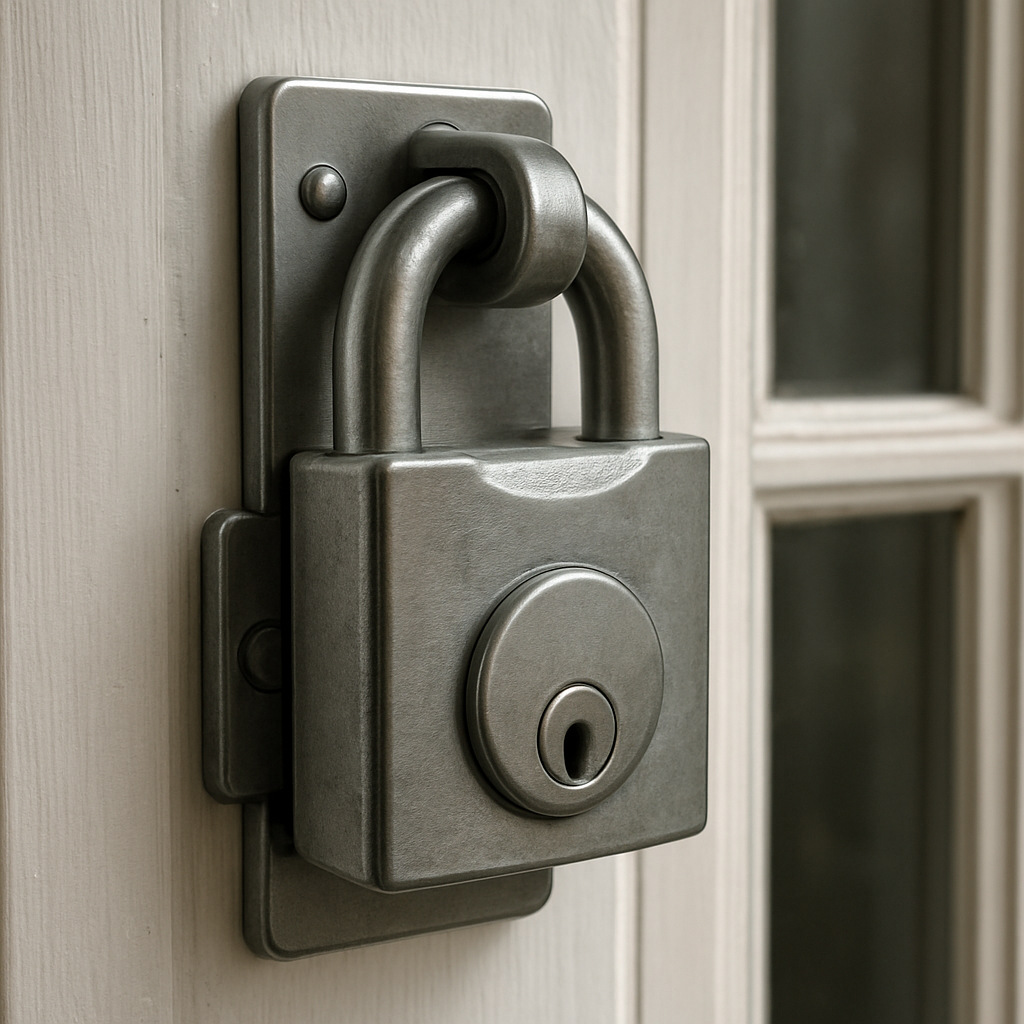
When you’re hunting for that extra layer of protection on French doors, a solid padlock can be a surprisingly elegant answer. It’s cheap, easy to swap, and when you pick the right model it behaves like a mini‑deadbolt that you can bolt right onto the door’s frame. Let’s walk through five reinforced padlock options that actually stand up to real‑world force.
1. Hardened‑steel shrouded padlock with double‑bolted shackle
This beast features a 12 mm hardened‑steel body and a shackle that’s covered on both sides by a metal shroud. The shroud prevents a crowbar from getting a grip, and the double‑bolted shackle means the lock won’t pop open even if someone tries to twist it with a wrench.
Real‑world example: a family in Portland installed one on their patio‑facing French doors after a break‑in attempt on a neighboring house. The intruder tried to cut the shackle with bolt cutters, but the hardened steel snapped the cutters instead – the lock stayed locked and the door never budged.
Action steps:
- Measure the gap between the door frame and the latch plate; you’ll need at least a 1‑inch clearance for the shroud.
- Drill two 3‑inch wood screws through the lock’s mounting plate into the studs behind the jamb.
- Test the lock by pulling hard on the door; if the shroud stays flush, you’ve got a solid install.
2. Weather‑resistant brass padlock with anti‑drill plate
Brass isn’t just for aesthetics – a brass lock body resists corrosion in humid climates, and many models ship with a steel anti‑drill plate that sits behind the shackle. The plate spreads impact force across a wider area, making it tougher to hammer through.
Scenario: a coastal homeowner in Miami struggled with rust‑eating locks until they switched to a brass version with the extra plate. After a heavy rainstorm, the lock still turned smoothly, and a neighbor’s attempt to pry it with a screwdriver failed on the first try.
Steps to reinforce:
- Remove any existing padlock and clean the mounting surface.
- Attach the anti‑drill plate with three 2‑inch lag screws into the framing studs.
- Secure the brass lock onto the plate, tightening the set screws until the shackle sits snugly.
3. Heavy‑duty aluminum lock with built‑in latch guard
Aluminum keeps the weight down while still offering a strong lock body. Look for a model that includes a latch guard – a small metal tab that blocks a pry bar from sliding between the door and frame.
We’ve seen this work well in a city loft where the French doors open onto a balcony. The owner added the latch guard, then tried to lever the door open with a flat‑head screwdriver; the guard caught the tool and the lock held.
Installation tip: position the guard so it aligns with the top edge of the door jamb. Use a spirit level to ensure the guard isn’t tilted, otherwise it could create a gap that a burglar could exploit.
4. Adjustable‑tension padlock with reinforced body
Some padlocks let you fine‑tune the shackle tension with a tiny screw on the back. This is handy when the door frame isn’t perfectly square – you can tighten the shackle just enough to eliminate wobble without over‑stressing the lock.
Example: a homeowner in a historic Victorian home had a slightly warped frame. By adjusting the tension, they eliminated a 2 mm gap that had been a weak point, and the lock now resists lever attacks that previously gave the door a little give.
How to set it up:
- Install the lock as usual.
- Close the door and watch the shackle. If you see any play, turn the tension screw clockwise in ¼‑turn increments.
- Retest with a firm push; the door should feel solid, and the shackle should sit flush.
5. Smart‑compatible RFID padlock
If you like the idea of a keypad but still want a physical lock, an RFID‑enabled padlock can be paired with a home‑automation hub. The lock still uses a hardened steel body, but you gain remote lock/unlock logs – great for tracking who accessed the patio after dark.
One of our readers in Austin installed this on a set of French doors that lead to a pool area. They programmed a temporary RFID tag for a babysitter, and the system sent a notification each time the lock was opened. The physical lock never gave way, and the digital audit gave peace of mind.
Quick checklist before you buy:
- Confirm the lock’s bolt throw is at least ¾ inch.
- Make sure the RFID reader fits within the 1‑inch‑by‑2‑inch mounting opening.
- Verify battery life – look for a model that offers a 12‑month replacement window.
If you want a visual walk‑through of how a reinforced padlock is mounted, watch this quick padlock installation demo. It shows the drilling, plate placement, and final lock test in under three minutes.
Conclusion
After strolling through mortise deadbolts, smart locks, lever handles, multi‑point systems, and reinforced padlocks, you’ve seen how many paths lead to the same goal: keeping your French doors secure without sacrificing style.
So, what’s the sweet spot? For most homeowners, a solid mortise deadbolt paired with a reinforced strike plate gives you that “military‑grade” feel while staying low‑profile. If you love tech, a surface‑mounted smart lock adds convenience and alerts – just remember the bolt still needs a good strike plate.
And don’t forget the basics: check the bolt throw (aim for at least ¾ inch), use long screws into studs, and test every lock before you call it a day. A quick “push‑and‑listen” test can reveal wobble before a burglar does.
Does any of this feel overwhelming? That’s normal. Break it down into bite‑size steps, start with the lock that matches your comfort level, and upgrade as you go. The peace of mind you get when you hear that solid click at night is priceless.
Ready to take the next step? Grab a notebook, compare the specs we’ve highlighted, and pick the solution that fits your home’s look and your budget. Your French doors deserve protection that’s as elegant as they are.
FAQ
What are the most important factors to consider when choosing french door security locks?
First, check the bolt throw – aim for at least three‑quarters of an inch. A longer throw means the bolt reaches deeper into the jamb, making it harder to pry.
Second, look at the material. Hardened steel or solid brass plates stand up to torque better than cheap zinc alloys.
Finally, match the back-set (the distance from the edge of the door to the lock’s center) to your door – most French doors use a 2‑3/8″ or 2‑3/4″ backset. When these three boxes line up, you’ve got a lock that feels solid without compromising style.
Can I install a mortise deadbolt on my French doors myself?
Yes, you can, but it’s a bit of a patience game. You’ll need a template, a chisel or router to cut the mortise pocket, and a good level.
Measure twice, cut once – even a millimeter off will leave the lock sitting crooked, which defeats the security benefit.
After the pocket is cut, reinforce the jamb with a steel plate and secure everything with 3‑inch wood screws into the studs. Test the bolt by pushing firmly; if there’s any wobble, you’ll need to deepen the pocket or adjust the plate.
Are surface‑mounted smart locks strong enough for French doors?
They’re stronger than many people think. Most smart locks include a built‑in deadbolt that engages the same strike plate as a traditional lock, so you still get that mechanical grip.
The electronic part just adds convenience – auto‑relock, remote alerts, and voice‑assistant integration. Just make sure the bolt throw is at least ¾ inch and the mounting plate lines up flush with the door edge.
When you pair a smart lock with a reinforced strike plate, you end up with a layered defense: the bolt stops brute‑force attacks, while the smart features deter opportunistic burglars.
How does a multi‑point locking system improve security for French doors?
Think of it as a three‑point hug. Instead of a single latch, the system locks at the top, middle, and bottom with one turn of the handle.
This spreads any force across the frame, so a burglar can’t just kick the middle latch open. The extra points also seal out drafts, which is a nice energy‑saving side effect.
When you choose a system with solid steel or I‑Beam construction, you’re adding real structural strength without sacrificing the sleek look of the doors.
What should I do if my French door frame isn’t square enough for a standard lock?
First, don’t force a mismatched lock – it’ll create gaps that become weak spots. Measure the gap between the jamb and the latch plate; you may need an adjustable‑tension lock or a custom strike plate.
Sometimes a simple shims kit can bring the frame into alignment. If the misalignment is more than a few millimeters, call a local locksmith; they can fabricate a matching plate or adjust the mortise pocket.
Getting the geometry right early saves you from wobble later, which means a sturdier lock and less chance of a break‑in.
Is a reinforced padlock a viable backup for my French doors?
Absolutely, especially if you want a removable layer of security. Look for a shrouded, hardened‑steel padlock with a double‑bolted shackle – that design prevents crowbars from getting a grip.
Mount the lock on a steel plate screwed into the studs, then test the whole assembly by pulling hard on the door. If the shroud stays flush and the lock doesn’t twist, you’ve got a solid secondary barrier.
Just remember: a padlock is a supplement, not a replacement, for a good deadbolt or multi‑point system.
How often should I maintain my french door security locks?
Give them a quick check every six months. Look for rust, loose screws, or a bolt that no longer throws the full length.
Lubricate the bolt with a silicone‑based spray – avoid oil, which can attract dust. If you have a smart lock, update the firmware whenever the manufacturer releases a patch.
Finally, do a “push‑and‑listen” test: close the door, engage the lock, and push hard. If you hear a hollow thud, tighten the strike plate or replace the screws. Regular upkeep keeps the lock performing like new and extends its lifespan.